Speaker
Joachim Pomper
(Istituto Nazionale di Fisica Nucleare)
Description
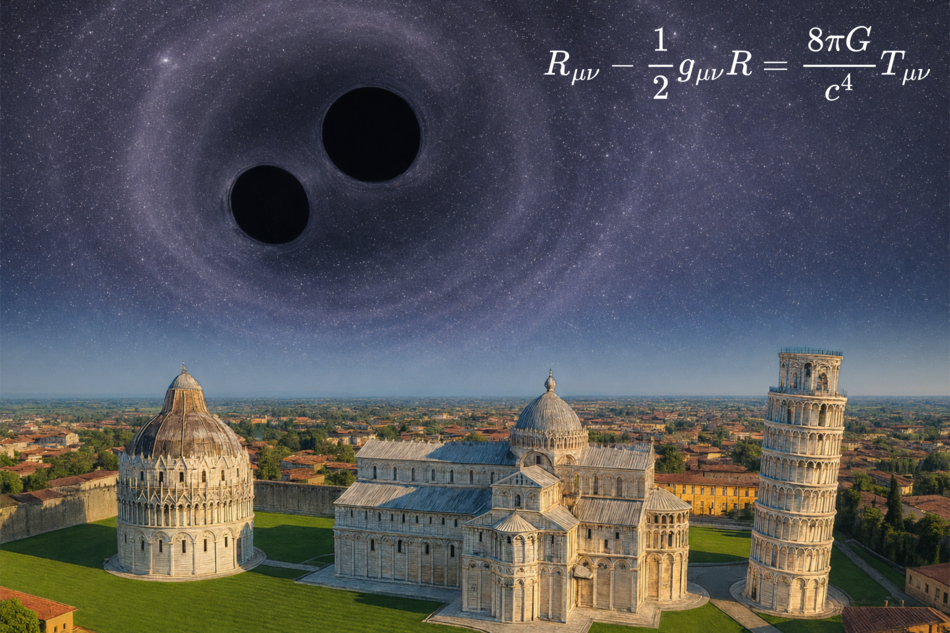
In this talk, we present forecasts for the accuracy with which GR-deviations of the Post-Newtonian inspiral coefficients can be constrained using third-generation ground-based interferometers, focusing on Einstein Telescope (ET) and binary black hole mergers. Given the expected high detection rate and the resulting computational infeasibility of a full Bayesian analysis, we adopt a Fisher matrix approach, simulating parameter estimation in an idealized observation scenario.
This allows us to study populations of tens of thousands of compact binary coalescences, as expected for ET, with feasible computational efforts.