Choose timezone
Your profile timezone:
The conference on "Biological Physics and Statistical Mechanics" will be held in Turin, Italy, from June 8 to June 12, 2026.
There is no conference fee.
The call for contributed talks is open (direct link)
Registrations are open (direct link)
Alfredo Braunstein (Politecnico di Torino), Michele Caselle (Università di Torino), Luca Dall'Asta (Politecnico di Torino), Andrea De Martino (Politecnico di Torino), Andrea Gamba (Politecnico di Torino), Anna Paola Muntoni (Politecnico di Torino), Andrea Pagnani (Politecnico di Torino), Alessandro Pelizzola (Politecnico di Torino), Marco Pretti (CNR-ISC, Torino), Filippo Valle (Università di Torino)
Carla Bosia (Torino Politecnico), Nicolas Brunel (Milano Bocconi), Raffaella Burioni (Parma), Antonio Celani (Trieste ICTP), Andrea Chiariello (Napoli), Mattia Conte (Napoli), Marco Cosentino Lagomarsino (Milano), Enzo Marinari (Roma Sapienza), Cristian Micheletti (Trieste Sissa), Velia Minicozzi (Roma Tor Vergata), Mario Nicodemi (Napoli), Matteo Osella (Torino), Francesco Piazza (Firenze), Raffaello Potestio (Trento), Alberto Puliafito (Candiolo), Silvia Scarpetta (Salerno), Agnese Seminara (Genova), Bernardo Spagnolo (Palermo), Sebino Stramaglia (Bari), Samir Suweis (Padova)
Sandro Azaele (Università di Padova)
Valentina Baldazzi (INRIA MACBES, Université Côte d'Azur)
Stefano Bo (King's College London)
Andrea Cavagna (CNR-ISC, Roma)
Pietro Cicuta (University of Cambridge)
Simona Cocco (CNRS, Paris)
Mattia Conte (Università di Napoli “Federico II”)
Paolo De Los Rios (EPFL, Lausanne)
Luca Ferretti (University of Oxford)
Silvia Grigolon (CNRS, Paris)
Alessandro Ingrosso (Radboud University, Nijmegen)
Fabrizio Lombardi (Università di Padova)
Carlotta Martelli (Johannes Gutenberg-Universität Mainz)
Edoardo Milanetti (Link Campus University, Roma)
Cesare Nardini (SPEC/CEA – Université Paris-Saclay)
Andrea Parmeggiani (Université de Montpellier)
Fernanda Pinheiro (Human Technopole, Milano)
Angelo Rosa (SISSA, Trieste)
Eleonora Russo (Scuola Superiore Sant’Anna, Pisa)
Martin Weigt (Sorbonne Université)
The event picture is a map of Turin from 1697.
In this work, we build on a recently developed Dynamical Mean Field Theory method to investigate the dynamical behavior of heterogeneous rate and spiking networks defined on finite-connectivity graphs. We show how topological disorder is sufficient to induce chaos in networks composed of distinct excitatory and inhibitory populations, and study how different degree distributions impact the high connectivity limit.
Experimental evidence suggests that the healthy brain operates near a critical regime, characterized by scale-free neuronal avalanches.
Recent research has increasingly focused on the mean temporal profiles of neuronal avalanches, as a more stringent and reliable test for criticality. Scaling arguments predict that, when appropriately rescaled, the mean temporal profiles of avalanches of widely varying durations should collapse onto a single scaling function, often approximated by an inverted parabola.
Experimental measurements have revealed clear departures from perfect symmetry, often displaying leftward skewing and extended tails.
We have investigated the stochastic Wilson–Cowan model on a modular network, in which synaptic strengths differ between intra-module and inter-module connections. The system exhibits a rich phase diagram, comprising symmetric and "broken symmetry" phases.
We found that, at the edge of the transition to a symmetric phase, avalanches are right-ward skewed, as observed also in the non-modular Wilson–Cowan model. On the other hand, at the transition to a "broken symmetry" phase, avalanches become left-ward skewed.
We found that in the latter case avalanches proceed in two stages: an initially cooperative regime, where excitatory activity is prevalent, followed by inhibitory competition that selects one dominant module and suppresses the others. This is the relevant mechanism leading to a fast rise of the avalanche, followed by a slower decay, and therefore to leftward asymmetry.
These findings contribute to a better understanding of the relationship between brain network topology and functional brain activity.
The study of neuronal activity through electrophysiological recordings provides a framework to investigate brain function and how biological alterations may influence disease onset. Different analytical approaches across multiple brain scales (single neurons, neural networks, neural mass, and whole-brain activity) yield distinct biomarkers, offering insight into where and how system-level disruptions emerge in specific pathologies. Neuronal avalanches [1], consistently observed across these scales, suggest that brain dynamics operate near a critical point, leading to the emergence of scale-free distributions in both the size of recorded activity and the duration of bursts of coordinated activations. The occurrence of simultaneous activations across multiple neuronal components (e.g., brain regions in whole-brain analyses) correlates with the underlying connectivity among these components [2], providing a natural interpretation in terms of network interactions grounded in biologically measurable architectures. However, how neuronal activity, organized into avalanches, is structured in time—particularly in relation to the sequence of brain states (such as microstates [3]) that the system traverses—and how the topological properties of brain architecture shape this temporal organization remain open questions. In this study, we analyzed magnetoencephalography (MEG) recordings from 30 healthy male and female subjects with no certified neurological disorders, during eyes-closed resting-state activity, within the framework of neuronal avalanche analysis. We find that the size of burst activations (defined as the integrated signal above threshold across all active brain regions during a bursting event) and the inter-avalanche silent time are not independent variables. The joint probability distribution of avalanche size conditioned on a given preceding silent time was estimated and compared with a reshuffled surrogate dataset, revealing significant temporal correlations. In particular, small avalanches are more likely to follow long silent periods, whereas large avalanches preferentially follow short silent intervals.
These results provide the opportunity to distinguish between small- and large-size avalanches. We find that brain regions with higher white matter node degree connectivity are more likely to be active during small avalanches, whereas less connected regions require higher levels of activity to be recruited. This suggests that the underlying structural connectivity plays a role in shaping the temporal and spatial organization of avalanche dynamics.
[1] J. M. Beggs, D. Plenz, Neuronal avalanches in neocortical circuits, J. Neurosci. 23, 11167–11177 (2003).
[2] P. Sorrentino, C. Seguin, R. Rucco, M. Liparoti, E. Troisi Lopez, S. Bonavita, M. Quarantelli, G. Sorrentino, V. Jirsa, A. Zalesky, The structural connectome constrains fast brain dynamics, eLife 10, e67400 (2021).
[3] G. Deco, V. Jirsa, A. R. McIntosh, Emerging concepts for the dynamical organization of resting-state activity in the brain, Nat. Rev. Neurosci. 12, 43–56 (2011).
SELEX experiments aim at identifying short RNA strands that specifically bind to a given target molecule, through several successive rounds of \textit{in vitro} selection. This talk presents ongoing work on a mathematical model learned on SELEX data with a twofold objective: gaining insight about the biophysical mechanisms underlying the selection process, and generating novel RNA sequences designed to maximize the likelihood of binding to the target.
The outline of the talk is the following.
First, introduce the biomedical applications of SELEX experiments, and the limitations in the experimental setting that motivate the development of a mathematical model.
Then, summarize existing computational methods, with an emphasis on modeling assumptions, computational constraints, and the interplay between the two.
Finally, present a statistical-physics inspired model of selection, along with some preliminary results.
In this work we present a study of the totally asymmetric simple exclusion process
with pausing particles (pTASEP), a model initially introduced to describe RNAP dynamics during
transcription. We extend previous mean-field approaches and demonstrate that the pTASEP is
equivalent to the exclusion process with dynamical defects (ddTASEP), thus broadening the scope
of our investigation to a larger class of problems related to transcription and translation. We extend
the mean-field theory to the open boundary case, revealing the system’s phase diagram and critical
values of entry and exit rates. However, we identify a significant discrepancy between theory and
simulations in a region of the parameter space, indicating severe finite-size effects. To address
this, we develop a single-cluster approximation that captures the relationship between current and
lattice size, providing a more accurate representation of the system’s dynamics. Finally, we extend
our approach to open boundary conditions, demonstrating its applicability in different scenarios.
Our findings underscore the importance of considering finite-size effects, often overlooked in the
literature, when modelling biological processes such as transcription and translation.
Living matter subsists on active, nonequilibrium processes. At small scales, physical theories of these processes compensate for a lack of statistical-mechanics foundations, available for equilibrium systems, with phenomenological laws. Using advances in first-principle microcanonical methods, we develop an ensemble theory of active fluctuations and illustrate its application to cell sorting.
Biological membranes often exhibit heterogeneous protein patterns, which cells control. Some patterns, such as the polarity spot in budding yeast, can be conceptualized as surface condensates, formed by physical interactions between constituents. However, the behaviour resulting from the interplay of physical interactions and material exchange between surface and bulk remains unclear. To investigate this, I will discuss a thermodynamically consistent theory, revealing that passive exchange generally accelerates the coarsening of surface condensates. Active exchange can further accelerate coarsening, or fully arrest it and induce complex patterns involving various length scales. I will show how these behaviors are related to non-local transport via diffusion through the bulk, rationalizing various scaling laws we observe and interpreting biologically relevant scenarios. This model will help us better understand polarity formation in buddying yeast, and more generally how cells can control surface condensates.
The growth of signaling domains on cell membranes is reminiscent of
coarsening in equilibrium phase separation, although the process is
intrinsically non-equilibrium and driven by energy-consuming enzymatic
cycles that switch signaling molecules between distinct states. We
develop a minimal model of this enzyme-driven phase ordering process.
Starting from microscopic reaction kinetics, we derive a mesoscopic
theory; this yields an explicit mean-field phase diagram and
closed-form expressions for key observables, such as interfacial
tension, domain fractions, and phase coexistence boundaries, in terms of
kinetic rates. In this context, phase coexistence is controlled by
non-equilibrium parameters like catalytic rates and enzymatic asymmetry,
rather than equilibrium parameters such as saturation concentrations.
The resulting phase-separated domains rapidly exchange material with
their surroundings. Their maintenance requires a continuous power input
determined by enzymatic kinetics. The predicted phenomenology is
consistent with experimental observations on reconstituted systems of
phosphoinositide and Rab5 membrane patterning. Our work identifies key
biochemical parameters controlling active phase separation on membrane
scaffolds and offers testable predictions for experiments.
Self-propelled Janus particles hold enormous promise for nanotechnology and biomedical applications, but their inherently random motion limits practical utility. In this study, we show through computer simulations that we can control the movement of chiral active Janus particles effectively, achieving over 60% efficiency by placing them in a line of rotating flows. Our approach does not require any external ratchet potentials; instead, the broken inversion symmetry due to gravity and the intrinsic chirality of active particles leads to rectification of particle motion. We show that dextrogyre and levogyre particles undergo pronounced segregation from a racemic mixture, with separation efficiencies reaching 98–99.99% under optimal conditions. Furthermore, our model accounts for realistic Gaussian distributions of intrinsic torques arising from fabrication imperfections and still achieves high separation efficiency (up to 98.5%). The system is robust across a wide range of parameters and scales, making it largely feasible for experimental realization. Our study offers a sorting mechanism in artificial swimmers regardless of their propulsion mechanism, especially, but not only, limited to fabricated active Janus particles. We expect our proposed rectification and chiral separation protocols to carry huge application potential for the emerging field of micro-swimmers.
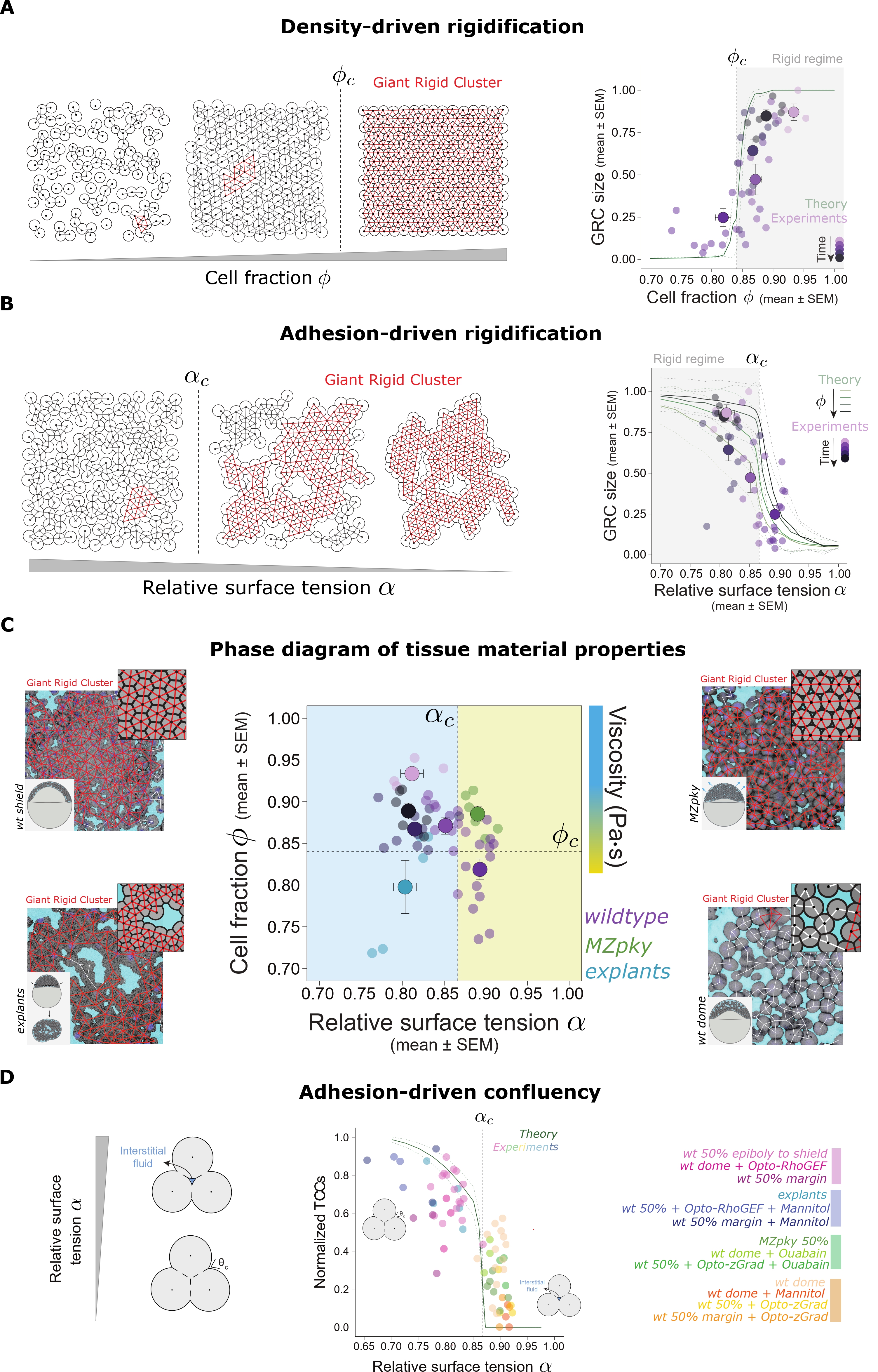
Organism development occurs through sequences of astonishingly precise spatiotemporal changes, along which embryonic tissues switch between fluid- and solid-like states, arising from non-linear interactions among cellular constituents. In this context, tissue fluidization observed in vivo in zebrafish embryos was interpreted, within the framework of rigidity percolation, as a rigid-to-floppy transition occurring at a critical point in cell connectivity. The microscopic parameters triggering these changes in cell connectivity, and whether they are interdependent, remain unclear. A density-driven rigidity transition is observed in wildtype embryos at a critical cell fraction, $\phi_c$, marked by the emergence of a Giant Rigid Cluster (GRC), in which cell movements are hindered (Fig. 1A). Using genetic manipulations, we uncoupled the tissue material response from the jamming behaviour, generating living tissues displaying solid-like or fluid-like properties, although being unjammed or jammed, respectively. We explain this apparently paradoxical behaviour by analytically deriving a critical point in the relative surface tension, $\alpha_c$, beyond which a floppy motif of soft, adhesive spheres spontaneously rigidifies. Simulations of arbitrary arrays of cells, whose energy is described by a soap-bubble-like Hamiltonian, show a sharp transition in the GRC size at the predicted $\alpha_c$; a transition also observed in real embryonic tissues with cell fraction below the critical jamming fraction $\phi<\phi_c$ (Fig. 1B). Embryonic tissues are thus characterized by a phase diagram organized around a double critical point ($\phi_c,\alpha_c$): when uncoupled from changes in cell fraction $\phi$, the relative surface tension $\alpha$ is the main control parameter of the tissue material properties (Fig. 1C). Furthermore, at the critical point $\alpha_c$ at which adhesion-driven rigidification takes place, a sudden formation of tricellular contacts is observed, dictating an abrupt tissue reorganization and defining a transition from a non-confluent to a fully confluent regime (Fig. 1D). Our theoretical and experimental results show how basic physical parameters have far-reaching roles in tissue architecture, properties, and functions.
The cardiac tissue shows deformation patterns made of spiral defects as a precursor of
cardiac arrest [1]. Such patterns are captured by pulsating active matter (PAM), which
considers particles that independently change their size by an active pulsation mechanism
that drives the system out-of-equilibrium; the competition between steric repulsion and local
synchronization allows for a periodic steady state made of spiral defects deformation
patterns [2].
Our goal is to quantify the energy dissipated by the system to sustain deformation patterns,
which requires the dynamics of the model to include all the energy exchanged between the
system and the environment; such property is referred to as thermodynamic consistency [3].
We introduce a discrete on-site version of PAM and its continuum description derived by an
exact coarse-graining; we compare our results at the microscopic and macroscopic level by
the means of analytical methods and numerical simulations.
We found that de-synchronized states exhibit high dissipation, while arrested uniform states
show exponentially decreasing dissipation with the synchronization parameter.
Also, we analysed the dissipation profiles of deformation patterns and developed a spatial
decomposition of defects-rich states in terms of dissipation.
Accessing the full energetics of PAM opens the way to a deeper understanding of the
spontaneous emergence of spiral patterns in contractile tissues; also, dissipation can be
used to develop the optimal protocol that drive deformation patterns.
[1] A. Karma et al., Annu. Rev. Condens. Matter Phys. 4, 313 (2013)
[2] Y. Zhang and É. Fodor, Phys. Rev. Lett. 131, 238302 (2023)
[3] G. Falasco, M. Esposito Rev. Mod. Phys. 97, 015002, (2025)
Bridging the gap between atomistic detail and continuum mechanics remains a central challenge in modeling mesoscopic biological membranes. This regime governs key processes such as membrane reshaping and protein-induced deformation, where the interplay between molecular features and mechanical response is crucial.
In this talk, I introduce MesoMem: a solvent-free, one-particle-thick, coarse-grained lipid bilayer model designed to address these challenges. By employing an additive interaction potential, MesoMem enables high-efficiency simulations while maintaining physical fidelity to fluid and elastic properties.
Implemented in LAMMPS, the model demonstrates spontaneous self-assembly into lamellar structures and stable vesicles. We show that MesoMem accurately recovers the theoretical $1/q^4$ fluctuation spectrum for tensionless membranes and provides highly tunable mechanical properties, including biologically relevant bending rigidities and area compressibility moduli. Finally, we demonstrate the model’s versatility in simulating membrane remodeling processes, specifically the adhesive wrapping of nanoparticles and the stabilization of fusion pore structures.
In the past fifteen years, several experiments have reported an increase in the diffusion of catalytically active enzymes compared to their passive state in the absence of substrate. While these observations remain debated and appear to depend on the measurement technique, they have stimulated significant theoretical interest due to their potential biological and physical implications.
Most theoretical approaches focus on specific mechanisms converting chemical energy into motion, invoking hydrodynamic, electrostatic, or mechanical effects. Here, we adopt a complementary perspective, assuming that reaction energy is released in discrete pulses acting as kicks on the enzyme. We show that, when rotational diffusion is sufficiently slow, successive catalytic events are not effectively independent, leading to finite-time correlations in the active force.
These correlations generate persistence in the motion and can produce regimes of enhanced diffusion, even when individual pulses are short-lived. We develop a stochastic model coupling reaction dynamics to enzyme motion and discuss its implications for both uniform and non-uniform substrate conditions, the latter potentially leading to chemotactic or anti-chemotactic behavior.
The Wang–Landau algorithm is a powerful Monte Carlo method designed to reconstruct the density of states of a system in a self-consistent manner, by uniformly exploring its energy spectrum. This approach enables the efficient sampling of rare configurations and is particularly well-suited for systems characterised by rugged energy landscapes. In this work, we illustrate a continuous variant of the Wang–Landau algorithm tailored for soft matter systems.
Our approach incorporates a novel, biased generation of proposal moves based on Brownian dynamics. This choice enables a controlled diffusion across the energy spectrum, ensuring its efficient exploration while maintaining the detailed balance. In addition, we introduce a stochastic protocol that randomly modulates the effective temperature throughout the dynamics: This strategy promotes an efficient configurational sampling, by enhancing both the crossing of free-energy barriers and the local exploration of energy minima.
We thus test the method on a diverse set of systems of increasing complexity, including Lennard–Jones clusters, polymer chains, and protein models described by Gō-like Hamiltonians. These case studies demonstrate the flexibility of the approach in handling both simple atomic systems and structured biomolecules with highly-frustrated energy landscapes.
Through extensive simulations, we show that the proposed algorithm provides a robust framework to accurately determine thermodynamic properties, free-energy landscapes, and phase transitions. In fact, the method correctly captures the location and nature of phase transitions in all investigated scenarios, highlighting its reliability and predictive power. Our results emphasise the potential of the method as a versatile tool for the numerical assessment of complex molecular systems, thereby exploring new strategies for the efficient exploration of soft matter and biomolecular statistical mechanics.
In this talk, we shall review how recent advances in physics-based enhanced simulation methods for rare molecular transitions now enable accurate prediction of co-translational protein folding pathways at atomic resolution. These approaches have revealed unexpected functional, pathological, and pharmacological roles for metastable states that are transiently populated during folding.
In particular, Pharmacological Protein Inactivation by Folding Intermediate Targeting (PPI-FIT) is a novel therapeutic strategy that exploits folding simulations to identify small molecules that selectively binding to structural pockets accessible only during folding. Such molecules prevent completion of the folding process and trigger protein degradation via the cellular quality control machinery.
The ability to pharmacologically target folding intermediates raises the question of whether these states also have physiological roles in protein homeostasis. Combining bioinformatics, atomistic simulations, and biochemical assays, we have found that roughly one-third of proteins in the human proteome contain phosphorylation sites buried in the hydrophobic core of their native structure. While inaccessible to kinases in the folded state, these sites are transiently exposed in long-lived folding intermediates, suggesting a previously unrecognized regulatory layer linking protein function to folding kinetics. Finally, folding intermediates are also exploited host-pathogen interaction. We shall provide evidence supporting the picture that a signal peptide of citomegalovirus inactivates the antagonist protein MICA by the PPI-FIT mechanism.
Entangled lasso motifs are looped chain portions intertwined with another chain fragment. Non-covalent lassos are present in one third of protein domains, with energetic frustration detected between their end residues [1]. The presence of misfolded protein sub-populations is connected to their entanglement properties [2]. Such misfolded species are kinetic traps, native-like in several respects, with non-native entanglement properties [3]. Our aim is to investigate, within a toy lattice model, the cause of the observed energetic frustration. We consider maximally compact conformations on a cubic lattice as native protein structures. We generate multiple sequence alignments (MSAs) for different target structures, either entangled or not, by minimizing the z-score, a standard protein design technique. MSAs are then filtered by retaining only good-folding sequences. The more filtered are MSAs, the more frustration emerges at the end residues of non-covalent lassos. This leads to the conclusion that Folding kinetic constraints cause energetic frustration, in order to counter the topological frustration brought about by entangled motifs. Both unfiltered and filtered MSAs are then used to infer Direct Coupling Analysis (DCA) couplings. The latter ones allow to generate synthetic MSAs which recapitulate the detected frustration signal, although DCA couplings themselves do not show any significant difference, due to kinetic constraints, in the extent of pairwise co-evolution.
[1] Baiesi M et al, Sci Rep 9 (2019) 8426
[2] Nissley DA et al, Nat Commun 13 (2022) 3081
[3] Salicari L et al, PLoS Comput Biol 19 (2023) e1011107
In the mammalian olfactory epithelium, each mature sensory neuron expresses a single olfactory receptor (OR) gene out of more than a thousand candidates, through a still-unknown mechanism (Monahan & Lomvardas 2015). We propose a two-step selection process: the nucleus first assembles several inter-chromosomal hubs that bring OR-specific enhancers into contact with dozens of OR genes (Monahan et al. 2017); within each hub a single gene is then chosen, and finally the cell collapses onto a single active hub (Pourmorady et al. 2024).
We model the intra-hub step by treating enhancers as particles that bind OR genes cooperatively via a shared mediator. The stochastic dynamics map onto a fully connected zero-range process with pairwise interactions. Because hubs contain only a handful of enhancers and genes, finite-size effects dominate. We locate the condensation threshold separating a disordered phase, where enhancers are dispersed across many genes, from a condensed phase in which they collapse onto one. The transition depends on hub composition, with a threshold that grows with the number of genes and shrinks with the number of enhancers. The model predicts that the selection probability grows with the enhancer-to-gene ratio of each cluster. Finally, we compare a toy model of the gene selection process to a 356,000-cell atlas assembled from four public scRNA-seq datasets, and recover the predicted scaling in multigenic precursors.
Objective:
Pathway-informed neural networks have become popular in biomedical research for incorporating biological knowledge into deep learning models, especially when dealing with high-dimensional omics data. These architectures are assumed to benefit from biological priors (e.g., gene-pathway associations), which are expected to enhance predictive performance and interpretability. However, it remains unclear whether this advantage arises from meaningful biological structure or from the sparsity such priors impose on the model. We aimed to systematically test whether pathway annotations improve model performance and explainability beyond the effects of structural sparsity alone.
Methods:
We considered 29 state-of-the-art biologically informed neural network models, and then selected those with publicly available code. For each, we compared the original biologically informed version to a randomized counterpart in which pathway information was replaced with random associations, while preserving the overall network sparsity and architecture. Models were benchmarked on their original prediction tasks, including classification, survival analysis and regression, using 20 independent train/test splits. Additionally, for selected models (PINNet, BINN, DeepKEGG, PASNet, and PathCNN), we conducted extended analyses including sparsity tuning, interpretability comparisons through feature importance and feature ablation. To ensure that the observed performance was not due to a particularly favorable random seed, randomization reproducibility was assessed using 30 independent randomizations of the pathway structure.
Results:
Across all evaluated models, randomized versions performed comparably to or even significantly better than their pathway-informed counterparts. Notably, models such as APNet, BINN, MPVNN, and PathDNN showed statistically superior performance in their randomized configurations. Sparsity alone proved sufficient to account for the performance gains typically attributed to biological priors. Importantly, the sparsity levels induced by pathway information were not optimal in many models, as randomized models at varying sparsity levels often outperformed the original configurations. Furthermore, pathway-informed models did not demonstrate clear advantages in interpretability, as randomized models were equally capable of identifying disease-relevant features.
Conclusion:
Our findings suggest that the benefits of pathway-informed neural networks primarily arise from structural sparsity rather than the biological content of the pathways themselves. The widespread assumption that integrating pathway information inherently improves deep learning performance and interpretability should be re-evaluated. We propose a robust benchmarking workflow based on controlled randomization to assess the true value of biological priors in neural network design. This framework can help the community determine when pathway integration is beneficial and avoid overinterpreting results driven by sparsity rather than biology.
Protein language models (pLMs) enable the generation of novel protein sequences by leveraging large-scale evolutionary information, but steering generation toward desired physicochemical properties remains challenging. Existing approaches often either reduce sequence diversity or require costly retraining. We introduce Iterative Lookback Monte Carlo (ILMC), a training-free inference-time sampling strategy that combines autoregressive sequence extension with Metropolis–Hastings refinement to approximate sampling from a maximum-entropy target distribution that balances model fidelity and steering objectives. Empirically, ILMC produces more diverse sequences than standard autoregressive baselines at comparable generative quality. Using simple steering potentials, ILMC improves desirable molecular properties, including increased predicted melting temperature and enrichment for a target structural class. ILMC also extends naturally to classifier-guided steering, where it outperforms purely autoregressive guidance in diversity while maintaining comparable target enrichment.
DNA microscopy is a novel imaging-by-sequencing technique that encodes spatial information into a proximity network of sequenced molecular barcodes, producing a geometric graph representing the probed sample rather than a conventional image. Inferring spatial coordinates from the topology of such graphs is a non-trivial inverse problem, made harder by experimental artifacts that alter the graph, including spurious barcode interactions, barcode collisions, and PCR amplification-induced hub nodes.
We investigate this problem in a low-data regime, motivated by the limited availability of experimental datasets. To obtain a realistic benchmark, we generate synthetic geometric proximity graphs constrained by observables extracted from data, so as to reproduce non-uniform spatial densities, degree heterogeneity, and locality of interactions. This allows us to test denoising methods beyond the simple homogeneous graph settings often used in current benchmarks.
As an initial contribution, we train a message-passing graph neural network to filter noisy edges from synthetic proximity networks. Beyond improved edge-level discrimination, preliminary tests indicate that GNN-based denoising may also benefit downstream spatial reconstruction, with initial evidence of improvement of reconstruction metrics on both synthetic and experimental proximity networks.
These results suggest that realistic graph denoising may be an important ingredient for robust spatial inference in DNA microscopy, and motivate the development of end-to-end GNN-based reconstruction approaches for this emerging imaging modality.
This talk aims to develop a simple dynamical model of the tip link, a protein that connects the stereocilia in the hair cells of the cochlea. In particular, the model’s goal is to reproduce the force-extension behavior observed in force ramp experiments done with optical tweezers on one of the two proteins that compose the tip link, Protocadherin 15, and to capture domain unfolding.
The model begins as a chain of masses and springs and is progressively modified to capture the different biological behaviors. Numerical simulations are performed under quasi-static and dynamic conditions and compared qualitatively with experimental force-extension curves and heatmaps.
The final model reproduces nonlinear force-extension relations, hysteresis between the extension and relaxation phase, extension jumps associated with unfolding events and rebound effects induced by an optical trap pulling protocol. These key aspects are consistent with experimental observations.
The model developed in this talk uses a new approach towards the study of the mechanical properties of the tip link. Unlike classic polymer models, the model captures the dynamical evolution of unfolding events within a simple and flexible framework.
Protein–protein interactions are fundamental to cellular function and represent key targets for therapeutic design, including antibodies and antibody mimetics. However, accurate prediction of binding interfaces and docking conformations remains a major challenge in computational structural biology.
A computational framework for the characterization of biomolecular recognition is presented, combining molecular surface analysis, statistical potentials, molecular dynamics, and neural network approaches. Particular attention is devoted to the interplay between short-range Lennard–Jones interactions, promoting shape complementarity at hydrophobic binding cores, and long-range electrostatic interactions, which appear especially relevant in transient complexes and in the outer regions of protein interfaces.
To efficiently encode shape and electrostatic complementarity, a superposition-free approach based on 2D Zernike polynomials is employed, enabling compact and rotationally invariant representations of molecular surface patches and electrostatic potentials. Hydropathy compatibility is additionally characterized through a molecular-dynamics-derived hydrophobicity scale based on the analysis of the protein–water hydrogen-bond network.
These descriptors are further exploited within machine-learning approaches. In particular, a neural network architecture named CIRNet (Core Interacting Residues Network) has been specifically developed to identify interacting core residues and improve docking pose rescoring. Finally, a novel radial analysis of binding interfaces is introduced through the HyBind descriptor, revealing characteristic hydrophobicity distributions from the interface center toward the outer interface regions and enabling improved discrimination between native-like and decoy docking conformations.
Overall, the presented approaches provide efficient and physically grounded strategies for protein interface prediction and docking characterization.
Modern single cell sequencing technologies enable us to probe cellular processes at unprecedented resolution, while introducing new theoretical challenges. A major difficulty lies in constructing dynamical models of cell behavior, as these technologies capture only a single snapshot of a cell's state, thereby preventing the observation of temporal dynamics. In this talk, I will discuss how we utilized single cell transcriptomics – a technique that measures RNA expression in individual cells – to develop a mathematical framework of gene expression and construct the attractor landscape regulating cell fate decisions. This model leverages a single cell transition tensor that harmonizes small stochastic fluctuations in gene expression at a local level (within individual attractors) with global changes in cell fate (transitions between attractors) to dissect cellular dynamics across multiple scales. This tensor is used to generate a cellular random walk and predict cell differentiation trajectories. Finally, we incorporate spatial transcriptomics data into our framework to project cell fate transitions in space.
Key publications:
-Bocci, Zhou, Nie, “spliceJAC: transition genes and state‐specific gene regulation from single‐cell transcriptome data” Molecular Systems Biology 18(11):e11176 (2022).
-Barcenas, Bocci, Nie, “Tipping points in epithelial-mesenchymal lineages from single-cell transcriptomics data”. Biophysical Journal 123(17):2849-2859 (2024).
-Zhou, Bocci, Li, Nie, “Spatial transition tensor of single cells”, Nature Methods 21, 1053–1062 (2024).
The degeneracy of the codon alphabet allows different codons to translate to the same amino acid, and different species show different patterns of codon usage. Using the wrong pattern reduces protein expression; however, using the most frequent codon for each amino acid does not necessarily maximize protein expression, which is the goal of codon "optimization".
Due to the complex (and mostly unknown) factors connecting codon sequence to protein in vivo expression, we choose a "safe" approach to optimization, that involves adjusting the codon sequence to mimic the “natural” choice a given species would make, to produce the target protein. To this end, we propose a simple statistical-physics model, where the probability of any codon sequence is just related to interactions between neighboring codons, which makes the model easily and exactly solvable.
We infer the model's parameters by maximizing the overall probability of a large database of human proteins. We test the method by redesigning the codon sequences of some proteins and performing experiments with luciferase as a reporter protein. While encouraging, the experimental results are not conclusive and clearly indicate the difficulty of relating protein expression to simple codon rules.
The integration of transcriptional data with post-transcriptional regulatory layers, such as microRNA-mediated processes, is critical for identifying driver genes and characterizing subtypes in heterogeneous diseases like cancer. Here, we present a topic modeling approach based on a hierarchical stochastic block model, designed to integrate diverse multi-omics datasets. We applied this method to breast cancer samples from The Cancer Genome Atlas (TCGA), combining messenger RNA, microRNA, and copy number variation data. Our results demonstrate that incorporating the microRNA layer significantly improves subtype classification accuracy. Moreover, the extracted "topics" correspond to genes and microRNAs implicated in breast cancer progression and are associated with patient survival probabilities. This approach offers a robust framework for uncovering hidden biological structures in complex diseases.
The diversity of components and functions in complex systems is at the basis of the system's well-being and resilience, with prominent examples in ecology, genomics, or technological systems. A hallmark of the system's diversity is Heaps’ law, which is the sub-linear growth of the number of distinct components in a modular system, i.e., the diversity, with its size. Its emergence is widespread across domains, from texts to genomes, and it appears jointly with the diversity quadratic variance–mean scaling (Taylor’s law).
Despite their ubiquitous co-occurrence, those diversity statistics lack a minimal and general explanation. We show that in sequential growth models both scalings emerge jointly if the probability of introducing novelty scales asymptotically as $p_n\sim h/m$, i.e., proportional to existing diversity and inversely proportional to system size. This relation captures two competing effects: diversity catalyzes further diversity, while innovation becomes progressively rarer as the system grows. We demonstrate that this effective dependency is empirically observable in real-world systems and in text generated by large language models.
However, a key finding challenges its mechanistic interpretation. Indeed, we further show that identical statistical laws can arise from a different growth process, where components are sampled in the presence of latent variables or topics. When component frequencies follow a broad, power-law-like distribution, Heaps’ law and its fluctuation scaling emerge without explicitly assuming any innovation rule, with an effective $p_n\sim h/m$ emerging from hidden structure.
These results show that universal diversity statistics do not uniquely reveal their underlying innovation mechanism. However, by analysing some systems that do have an inherent topic structure, such as taxonomical classes in genomes or themes in LEGO toys, we show that the second framework provides a preferable sufficient explanation.
High-throughput directed evolution produces longitudinal sequence libraries that are ideal for probing local fitness neighborhoods but often underpowered for global inference tasks such as contact prediction. We present an unsupervised generative model that integrates directed-evolution sequencing time series with natural homologs. We project sequences into a low-dimensional latent space learned from the natural multiple sequence alignment and model the experimental process as an Ornstein–Uhlenbeck dynamics in that space. Maximum-likelihood estimation of the latent drift and noise parameters determines a stationary Gaussian distribution, which induces an effective Potts model in sequence space. The inferred couplings improve structural contact prediction by combining global evolutionary constraints from nature with local, experiment-specific signals. Experiments on PSE1 beta-lactamase and dihydrofolate reductase demonstrate improved predictive performance over methods using only natural or only experimental data, with gains concentrated in intermediate- and long-range contacts.
Computation of observables in discrete stochastic, possibly conditioned, dynamics over large sparse networks is at the basis of a myriad of applications. The Matrix-Product Belief Propagation method allows a semi-analytical estimation of such observables in tree-like networks with a controlled error that depends on the bond size, that is the dimension of the employed square matrices. Its computational cost is linear in the time horizon and the network size for a large family of models with discrete degrees of freedom.
Here, a generalization of this method to models with continuous or mixed continuous/discrete degrees of freedom is presented, using a tunable expansion in a Hilbert function basis. The computational cost of the method is linear in the network size with a prefactor that depends on the basis size and the bond size.
The method's efficacy is demonstrated by employing a Fourier basis for a mixed continuous/discrete representation of the Kinetic Ising dynamics with real-valued random couplings, where intermediate ``local fields'' are treated as continuous. The accuracy of the method is verified via comparison with Monte-Carlo simulations. For this model, we calculate time auto-correlations, time evolution of energy and magnetization, and finally we estimate the large deviation function of the magnetization at a given future time.
The intrinsic dimension (ID) of gene expression profiles has recently been proposed as a geometric potency score for scRNA-seq data. We test what fraction of this signal reflects genuine manifold geometry versus marginal statistics of gene expression, by preserving per-gene expression distributions while destroying co-expression structure. Across many differentiation lineages, the ID drop by differentiation mostly survives this null, preserving the ID drop induced by differentiation. This decomposes the ID signal into a marginal component and a correlation-driven residual. When the ID and its shuffled counterpart track each other, simple marginal-based measures such as transcriptome entropy are effective proxies for cell potency; when they differ substantially, the residual is where ID provides information inaccessible to marginal distributions. We rationalize these observations with a minimal generative model, in which differentiation corresponds to a decrease of the entropy of the latent topic distribution.
Boltzmann Machines trained on evolutionary sequence data have emerged as a powerful paradigm for the data-driven design of artificial proteins. However, the relationship between model architecture, specifically parameter density, and experimental performance remains poorly understood. Here, we investigate this relationship using the Chorismate Mutase enzyme family as a model system. We compare standard fully connected Boltzmann Machines for Direct Coupling Analysis (bmDCA) with sparse models generated via progressive edge activation (eaDCA) and edge decimation (edDCA). We identify a maximum-entropy model (meDCA) along the decimation trajectory that represents an optimal balance between constraint satisfaction and the flexibility of the probability distribution. We synthesized and tested artificial sequences from all models using an in vivo complementation assay, finding that all architectures, regardless of sparsity, generate functional enzymes with high success rates, even at significant divergence from natural sequences.
Despite this functional equivalence, we demonstrate that the meDCA model samples a viable sequence space orders of magnitude larger than its low-entropy counterparts. Furthermore, comparative analyses reveal that high-entropy models systematically minimize overfitting and better capture the local neutral spaces surrounding natural proteins. These findings suggest that while various models satisfying coevolutionary statistics can generate functional sequences, high-entropy Boltzmann Machines provide a superior representation of the underlying evolutionary fitness landscape.
Biochemical assays for replication origin identification are costly and time-consuming, motivating the development of computational approaches based on population sequencing data (DNA abundance profiles). However, accurate identification of DNA replication origins from such data remains challenging because origin firing is inherently stochastic: many origins fire inefficiently or are passively replicated, leaving weak or undetectable peaks in DNA abundance profiles. Widely used peak-calling approaches therefore systematically miss low-efficiency origins and require extensive smoothing and heuristic thresholds.
Here, we present MORI (Model-based ORigin Inference), a physics-based algorithm that infers genome-wide replication initiation landscapes directly from sequencing data. MORI models the underlying biological process of DNA replication using the Kolmogorov–Johnson–Mehl–Avrami formalism for nucleation-and-growth processes, and accounts for exponentially growing cells and fluorescence-activated cell sorting, yielding an analytical expression for the expected DNA copy number profile.
We successfully applied MORI to Sort-seq datasets from multiple yeast species spanning large evolutionary distances. This cross-species application enables the retrieval of replication-associated DNA motifs and comparative analyses of the evolutionary conservation and repositioning of replication origins. Because the framework relies only on sequencing-based copy number profiles and a general replication model, it can be readily applied to other eukaryotic genomes, providing a scalable and transferable approach to reconstruct stochastic replication programs across species.
Transfer from Politecnico to Sacra di San Michele at 14:15pM
Sensing and inferring concentrations in the environment is a relevant task for various life-like behaviors ranging from efficient navigation to cell-cell communication. Seminal work by Berg and Purcell focusing on bacterial chemotaxis demonstrated that the precision with which concentrations can be sensed by bacteria is fundamentally limited by molecular counting noise. Interestingly, as shown in follow-up work, relaxing many of the simplifying assumptions such as introducing binding noise did not yield fundamentally new bounds. Nonetheless, most of this work focuses on idealized geometries and homogeneous distributions of receptors. Here, we ask what role confinement plays for sensing precision and show that boundary conditions can drastically alter the optimal receptor distribution, even in simple one-dimensional geometries. We further show that optimizing the receptor distribution can be recast as gradient flow dynamics of an effective free energy with non-local coupling, resembling a phase-separating system with long-range interactions. These findings suggest that spatial constraints play an important role in shaping sensing performance and may help identify design principles of biological sensory systems adapted to their local environment.
Extrachromosomal DNA (ecDNA) drives oncogene amplification through complex structural rearrangements that radically alter 3D chromatin topology. Here, we introduce a physical framework to predict the de novo 3D architecture of ecDNA in silico. By modeling DNA as a polymer driven to fold by interacting molecules (binders), we utilize the PRISMR machine-learning algorithm to infer the distribution of physical binding sites using strictly data from healthy, non-mutated reference cells. By mapping these inferred profiles onto the rearranged, circular ecDNA topology, we achieve a striking result: the highly accurate prediction of complex ecDNA 3D folding relying solely on healthy reference inputs. Our in silico ecDNA folding shows excellent quantitative agreement with experimental cancer contact matrices, formally disentangling cis (intra-ecDNA) and trans (inter-ecDNA) spatial interactions. Crucially, this allows us to precisely identify and predict the specific genes hijacked by these novel ectopic 3D contacts. Ultimately, combining statistical mechanics, polymer physics, and machine learning, it is possible to achieve highly accurate reconstructions of ecDNA architectures, opening new avenues for understanding oncogene amplification.
Recent literature increasingly highlights the crucial role of non-coding alterations in oncogenesis. In particular, structural variants (SVs) can drastically reorganize the three-dimensional architecture of the genome, leading to phenomena such as enhancer hijacking and the reorganization of chromatin domains. Theoretical models of chromosome folding are emerging as great tools to accurately describe and predict the 3D organization of the genome. However, modeling chromatin folding in highly rearranged cancer genomes, such as those in neuroblastoma, remains a complex challenge.
By combining Machine Learning and Polymer Physics, we develop a predictive framework for the study of cancer genomes. The distinctive value of our approach lies in its predictive nature: by leveraging polymer physics principles, we simulate the structural impact of SVs starting exclusively from wild-type (healthy) experimental data.
We validated our framework by implementing more than 10 distinct structural mutations in a neuroblastoma cell line with available Hi-C data. Our simulations successfully identified ectopic contacts between genes and distal enhancers, as well as gene-to-gene interactions, induced by the rearrangements. To identify functional interactions, we also introduce a control model designed to evaluate the biological significance of the emerging contacts. Crucially, this approach is designed to be extended to patient-derived samples where only linear genomic coordinates are available, offering a mechanistic tool to interpret non-coding alterations even in the absence of experimental conformational data.
We introduce RNA Mamba, a generative selective state space model trained jointly on thousands of RNA families from the RFAM dataset. Mamba state space models are an alternative to Transformers, offering linear scaling with sequence length and the ability to process long-range dependencies efficiently. We incorporate structural information into the model using a structural tokenization scheme in which nucleotides are enriched with secondary structure information (e.g., base-pairing encoded via dot-bracket notation).
We show that a single, relatively small model (on the order of 10 million parameters) trained on all families can generate realistic sequences within many known families and exhibits partial generalization to unseen families. While this cross-family generalization remains challenging, our results suggest that shared structural and statistical regularities can be learned beyond family boundaries.
Viruses can re-structure the architecture of host cells genome and also alter their epigenomic landscape. In this study, we investigate with polymer physics modelling virus induced genome re-organization by using available datasets from different viral infections causing: COVID-19 syndrome (SARS-CoV-2 virus), human common cold (HCoV-OC43 virus) and avian influenza (IAV-H5N1 virus) [1,2]. By combining recent experimental Hi-C data from virally infected human cells with in-silico polymer models, we find that each pathogen induces peculiar re-structuring at the level of A/B compartments [3]. Specifically, more pronounced effects are observed in SARS-CoV-2 and IAV-H5N1 infected cells, where a generally enhanced A/B mixing is observed, whose symmetry degree depends on the infection. On the other hand, HCoV-OC43 infection exhibits comparatively milder effects [3]. Overall, our results suggest that viruses associated with more severe disease phenotypes could induce deeper, large-scale chromatin architectural changes [3].
[1] S. Heinz et al., “Transcription Elongation Can Affect Genome 3D Structure”. Cell 174, 1522-1536 (2018).
[2] R. Wang et al., “SARS-CoV-2 restructures host chromatin architecture”. Nat. Microbiol. 8, 679-694 (2023).
[3] A. Fontana et al., “Comparative modelling of large-scale 3D genome re-arrangements in different viral infections”. Research Square, https://doi.org/10.21203/rs.3.rs-9268090/v1 (2026).
The cellular prion protein (PrPC) is mostly expressed in the brain and in the central nervous system as a structure with a disordered region and a globular part, but it has no clear role in the organisms in which it is present. For reasons that are still unknown, PrPC spontaneously converts to its misfolded counterpart PrPSc, which accumulates in tissues and gives rise to a plethora of neurodegenerative diseases. At this day, the mechanism that explains the misfolding process of PrPC to PrPSc is not yet clear, especially when considering the
globular region of the former. Here, we analyze molecular dynamics simulations of PrPC using information-theoretical measures to retrieve its hot-spots, which are the residues that might be functionally important for the protein, and its communication network, which can highlight any mechanical and functional relation between different areas of PrPC. We found hot-spots in the $\alpha_1$ helix and the $\beta_2$-$\alpha_2$ hinge, that are involved in the initiation of the misfolding process. In the communication network, the pair Val209-Cys214 acts as the main hub for the information relay between the two aforementioned regions. These promising results suggest that the main features that trigger the misfolding process are already encoded in the structure of PrPC, paving the way for the identification of novel putative drug targets starting from its native structure.
The core function of the heart and brain arises from the coordinated interaction of their cells.
Both organs rely on excitable units -- cardiomyocytes and neurons -- that propagate electrical signals when a specific threshold is exceeded.
Despite this similarity, the two organs exhibit opposed collective behavior due to marked differences in intercellular dynamics and network topology.
In the heart, localized electrical connectivity through reciprocal gap junctions generates local synchronization and traveling waves, ensuring efficient pumping function with low entropy.
In the brain, long-range connectivity via delayed, non-reciprocal chemical synapses promotes asynchronous dynamics with high entropy, supporting information processing.
Using coupled FitzHugh-Nagumo units, we showcase that characteristic non-linear dynamics for the heart and brain can be related to the network structure, which places both systems on opposite sides of a synchronization phase transition.
Crossing this phase transition would lead to pathological conditions, e.g., heart arrhythmia or brain seizures, quantifiable via synchronization and entropy measures.
Our joint view on heart and brain dynamics may foster new perspectives on the function and pathology of both organs.
Predicting antibody-antigen binding affinity from sequence data is a central challenge in computational immunology and virology. Linear models trained on deep mutational scanning (DMS) experiments provide a tractable approximation, but their generalization performance depends strongly on data structure, dimensionality, and regularization. Here, we develop an analytical framework to characterize the generalization error of ridge regression in this setting.
We derive explicit expressions for the expected risk, decomposed into bias and variance, as functions of the aspect ratio, signal-to-noise ratio, and regularization strength. We identify the optimal regularization minimizing the generalization error and clarify its dependence on data geometry.
For one-hot encoded random sequences, we recover the isotropic case governed by the Marchenko-Pastur spectrum, obtaining closed-form expressions for both risk and optimal regularization. We show that a $q$-letter encoding of length $L$ introduces $L$ zero modes, effectively reducing the dimensionality from $qL$ to $(q - 1)L$, with $L_2$ regularization selecting a natural zero-sum gauge for the parameter vector.
We then analyze DMS-like data, where sequences are sparse mutations around a wild-type. The resulting anisotropic covariance leads to a decomposition of the bias into two interpretable components: alignment with the wild-type and variability across mutations. Introducing $F^*$, the fraction of signal aligned with the wild-type, we show that increasing $F^*$ enhances the effective signal-to-noise ratio and shapes the optimal regularization.
We apply these theoretical results to real biological data, estimating the parameter $F^*$ and the effective signal strength for DMS datasets of SARS-CoV-2 binding to multiple antibodies. We then correlate these quantities with experimentally characterized antibody properties, such as binding class and time of observation.
This framework highlights how tools from statistical physics and random matrix theory can be used to analyze regression with structured biological data, and can be extended to out-of-distribution generalization and more complex models.
DNA in vivo is frequently subjected to strong mechanical deformations during a variety of biological processes, including looping, supercoiling, and DNA–protein interactions. While coarse-grained models often describe DNA as a smoothly bendable polymer, both experimental and theoretical studies indicate that mechanical stress can induce localized kinks that significantly alter its mechanical response. However, unbiased all-atom simulations are typically limited to short timescales (on the order of a few microseconds), within which DNA remains only moderately deformed. Here, we report recent all-atom simulation studies combined with the Rigid Base Biasing of Nucleic Acids (RBB-NA) algorithm, which enables the generation of highly deformed DNA configurations and the reconstruction of free-energy landscapes deep into the anharmonic regime. Our analysis reveals two distinct pathways to kinking and shows that kink formation is often associated with undertwisting, a condition expected to be favored in vivo in negatively supercoiled chromosomes.
The rapid advancement of environmental sequencing technologies, such as metagenomics, has significantly enhanced our ability to study microbial communities. The eubiotic composition of these communities is crucial for maintaining ecological functions and host health. Species diversity is only one facet of a healthy community’s organization; together with abundance distributions and interaction structures, it shapes reproducible macroecological states, that is, joint statistical fingerprints that summarize whole-community behavior. Despite recent developments, a theoretical framework connecting empirical data with ecosystem modeling is still in its infancy, particularly in the context of disordered systems. Here, we present a novel framework that couples statistical physics tools for disordered systems with metagenomic data, explicitly linking diversity, interactions, and stability to define and compare these macroecological states. By employing the generalized Lotka–Volterra model with random interactions, we reveal two different emergent patterns of species interaction networks and species abundance distributions for healthy and diseased microbiomes. On the one hand, healthy microbiomes have similar community structures across individuals, characterized by strong species interactions and abundance diversity consistent with neutral stochastic fluctuations. On the other hand, diseased microbiomes show greater variability driven by deterministic factors, thus resulting in less ecologically stable and more divergent communities. Our findings suggest the potential of disordered system theory to characterize microbiomes and to capture the role of ecological interactions on stability and functioning.
Although ecological communities exhibit pervasive scaling relations between size, abundance, and resource availability, the dynamical mechanisms underlying these patterns remain poorly understood. Using metabolic scaling arguments, we develop a dynamical framework for forest communities based on spatially-explicit seed dispersal, growth, local competition, and global resource constraints. By deriving an analytical solution for the tree-size distribution, we show that its stationary state exhibits two distinct power-law regimes whose exponents are controlled by the relative strength of resource and spatial competition. The crossover between these regimes is set by the interplay between seed injection and local resource availability, establishing an explicit link between the scaling exponent of the size distribution and forest health. Finally, we show that boundary disturbances can break the ecological balance between competing species and induce effects that propagate deep into the forest bulk, far beyond the single-plant dispersal range. Together, these results provide a unifying dynamical perspective on forest scaling laws with potential applications to a broad range of biological communities.
Ecological communities are theoretically predicted to be unstable upon crossing a critical threshold of species diversity, as first shown by May. Yet, natural ecosystems exhibit remarkable stability, suggesting the presence of additional stabilizing mechanisms. While the diversity-stability relation is typically assessed assuming fixed interactions, real ecosystems evolve in intrinsically time-dependent states. To understand how this affects stability, we linearize a general non-autonomous dynamical system around a reference operating state and model the resulting parameters as stochastic processes, which represent a minimal extension of static random interactions to time-varying ones. We derive exact stability bounds demonstrating that temporal variability allows ecosystems to remain stable even when their instantaneous Jacobian would predict instability. We validate our results using generalized Lotka-Volterra equations, numerically showing that time-varying interactions postpone the onset of replica-symmetry breaking. Overall, our results indicate that temporal variability systematically improves stability, demonstrating a general mechanism by which complex ecosystems can violate classical diversity-stability bounds.
Real ecosystems, characterised by sparse and asymmetric interactions, represent highly complex disordered systems that pose a fundamental challenge for theoretical analysis. To address this, we analyse the generalised Lotka-Volterra model on sparse graphs, with and without demographic noise [1]. Drawing on the success of local closures in spin-glass dynamics [2] and combinatorial optimisation, we adapt this framework to Fokker-Planck equations to characterise stationary states in sparse networks. By deriving local Fokker–Planck equations and employing a mean-field closure, we obtain an efficient characterisation of stationary states for both symmetric and asymmetric interaction structures. Validated against direct numerical simulations, this method recovers recent results [3] and dense-network limits. Furthermore, it enables the systematic mapping of the phase diagram for sparse asymmetric networks for the first time. Specifically, our results not only show that sparsity shifts the phase boundaries from those predicted in the dense limit but also reveal the existence of a phase characterised by multiple stable fixed points. This stands in stark contrast to dense asymmetric systems, where the single-equilibrium phase gives way to a regime in which all fixed points are unstable, leading to the emergence of chaotic dynamics. We match these newly mapped phase transitions with insights from Random Matrix Theory [4], demonstrating a direct link between the spectral properties of sparse random matrices and the dynamical behaviour of these sparse ecological models. Ultimately, our local equation framework provides a versatile, computationally efficient tool for exploring complex dynamics in realistic ecological communities, with broad applications to a wide class of complex systems in statistical physics.
[1] D. Machado, P. Valigi, T. Tonolo, and M. C. Angelini. Local equations for the generalized Lotka-Volterra model on sparse asymmetric graphs, arXiv:2511.17499 (2025).
[2] D. Machado, R. Mulet and F. Ricci-Tersenghi. Improved mean-field dynamical equations are able to detect the two-step relaxation in glassy dynamics at low temperatures, Journal of Statistical Mechanics: Theory and Experiment 123301 (2023).
[3] T. Tonolo, M. C. Angelini, S. Azaele, A. Maritan, and G. Gradenigo, Generalized Lotka-Volterra model with sparse interactions: non-gaussian effects and topological multiple-equilibria phase, PRX Life 4, 013017 (2025)
[4] P. Valigi, I. Neri, and C. Cammarota, Local sign stability and its implications for spectra of sparse random graphs and stability of ecosystems, Journal of Physics: Complexity 5, 015017 (2024).
In this talk we study the equilibrium phases of a generalized Lotka-Volterra model characterized by random, sparse, and symmetric
interactions. The equilibrium distribution of species abundances is obtained by means of the cavity method and the Belief Propagation
equations, which allow for an exact solution on sparse networks. Our results reveal a rich and nontrivial phenomenology that deviates
significantly from the predictions of fully connected models. Consistently with data from real ecosystems, which are characterized by
sparse rather than dense interaction networks, we find Gamma-like abundance distributions. In addition, we also identified a novel
topological multiple-attractor phase. The peculiarity of this phase, which differs from the multiple-equilibria phase of fully connected
networks, is its strong dependence on the presence of extinctions. All these findings provide new insights into how network topology and
disorder influence ecological and biological networks, particularly emphasizing that sparsity is a crucial feature for accurately modeling
real-world ecological phenomena.
Planktonic communities play a critical role in global biogeochemical cycles and marine ecosystems. However, their quantitative modelling is heavily constrained by the complexity of the seascape. Despite theoretical advances, recent models remain largely restricted to numerical simulations, leaving some open questions: What governs the evolution of plankton biomass? What is the interplay between oceanic currents and biology? What regulates population patchiness?
To address these questions, we propose a novel unifying framework. Starting from the logistic population model, we introduce spatiotemporal variability as environmental noise and integrate the dynamics on top of a one-dimensional lattice. Thus, we are able to include a diffusive term representing the role of ocean currents and demonstrate how diffusion modifies the population distributions across time, space, and species. We show that diffusivity introduces two distinct classes of stationary distributions: one where diffusivity damps population variability, leading to a small-fluctuation regime, and another where diffusivity acts as a perturbation. Moreover, we prove that population patchiness can be fully described by diffusion and the response time of the organism. Finally, these analytical predictions are confirmed by the most recent plankton population datasets, showing the capability of our framework to capture the main drivers of plankton biodiversity.
The classical Luria–Delbrück theory links stochastic dynamics to parameter inference in expanding populations, but relies on assumptions typically violated in living cells and standard experimental designs.
By modeling stochastic population dynamics, we show that growing colony-size distributions and the empirical site frequency spectrum are distinct projections of the same branching-process dynamics, corresponding to different coarse-grainings of a common generative process.
We construct two inference schemes on this shared model: (i) a fluctuation-based inference generalized structured internal states and emerging heterogeneity, yielding estimators for mutation rates in subpopulations; and (ii) mutation spectrum-based inference extended to stochastic observation models with finite sampling and sequencing noise, altering the mapping between observed frequencies and mutational events.
Together, these results establish a data-driven statistical-physics framework for inference of mutation rate evolution applicable from microbes to patient-derived cancer organoids.